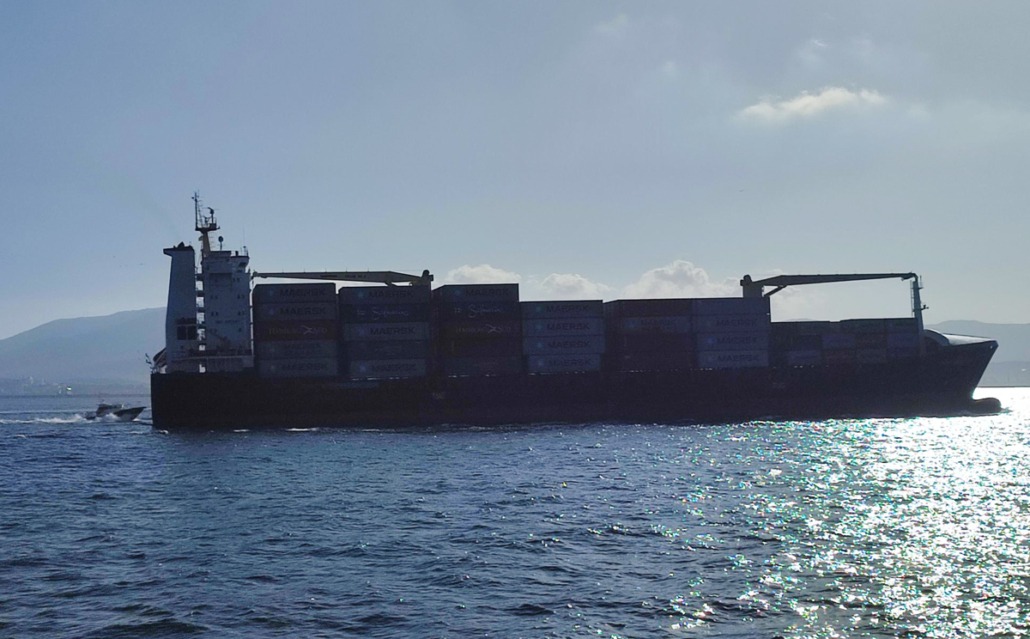
When War Hits the Shipping Lanes: The Hidden Cost of Conflict in Maritime Transport
It is a well-known fact that around 80% of global trade is transported by sea; but what happens when those waters are no longer safe?
International trade does not come to a sudden halt, but it is directly affected and, in many cases, without any opportunity to react in time. Longer-than-usual shipping routes, unpredictable costs, strained contracts and a chain of liability that is not always balanced or clearly defined.
Even though they may seem far removed from us, armed conflicts in strategic locations—the Red Sea, the Gulf of Oman, the Strait of Hormuz—are not far off when we talk about international transport. They slip into the supply chain almost seamlessly: it starts with a shipowner’s decision on whether a vessel is seaworthy and ends with an importer failing to receive their cargo on time, with costs deviating from what was previously agreed, and with contracts that cannot be fulfilled.
That is what this article is about: tracing that chain of events. It looks at how war at sea sets off a chain reaction that begins with marine insurance and ultimately affects freight rates, delivery times, sales contracts and, ultimately, the global economy.
The designation of “War Zone”
It all begins with a technical decision that has devastating commercial consequences: the classification of a maritime zone as a high-risk area for warfare. This task falls primarily to the Joint War Committee (JWC), an independent body comprising representatives of insurers from the Lloyd’s of London market and the International Underwriting Association (IUA). Its role is to monitor geopolitical and security conditions in various maritime regions in order to identify which areas pose a high risk of conflict.
The JWC’s decision is not merely declaratory. It has immediate and quantifiable effects: it triggers what are known as ‘war risk premiums’, i.e. additional premiums that shipowners must pay to maintain cover for their vessels in those areas. And, in the most serious cases, when the risk is classified as extreme, insurers issue a “Notice of Cancellation”, which is a formal notice of cancellation of cover that provides only seven days of residual cover. Once that period has elapsed, the vessel sails without insurance cover, which in practice means it cannot sail. The situation in the Red Sea and the Gulf of Aden following the Houthi rebel attacks in late 2023 perfectly illustrates this mechanism. Within a matter of weeks, what had been a regular shipping route for trade between Asia and Europe became a de facto no-go zone for much of the world’s merchant fleet.
Marine insurance against the risk of war
At this point, it is important to have a clear understanding of the insurance framework for maritime transport, because that is where the chain of problems begins.
Standard insurance policies fall into two main categories. On the one hand, there is the shipowner’s own insurance: Hull & Machinery (H&M) cover for damage to the vessel itself, and Protection & Indemnity (P&I) cover for third-party liability. On the other hand, shippers’ own insurance policies, which are primarily based on the British Institute Cargo Clauses (ICC), clauses that are also applied in other areas of transport.
The common feature of both types of cover is the exclusion of war risk, as provided for in Article 418 of the Spanish Maritime Navigation Act (Act 14/2014 of 24 July). Por tanto, las condiciones estándar del mercado excluyen expresamente de la cobertura ordinaria los riesgos y daños derivados de situaciones de guerra (conste declarada o no, sea civil o internacional), así como de bloqueos, apresamiento, captura o terrorismo. No es una letra pequeña sin más, sino una exclusión estructural del sistema que se ha mantenido durante años.
The way to avoid this situation is to take out specific additional cover through “Institute War Clauses”, for both the vessel and the cargo. However, this additional cover, which protects against direct damage and may apply to situations such as ‘general average’, also has significant limitations: it does not cover losses arising from delay, nor the costs of re-shipping the goods when the vessel has had to unload at an intermediate port, nor any surcharges or additional costs imposed by the shipping company on the shipper as a result of the war situation it is facing.
In practical terms, war risk insurance may cover you if your container sinks or is damaged by an attack, but it does not cover the consequences of it arriving two months late (even though the delay is often the greatest actual financial loss for the shipper), the problems arising from having to unload at another port because the vessel was unable to continue its route, nor the fact that you are charged a ‘War Risk Surcharge’ of several thousand euros.
The shipowner’s response: legal and contractual rights
As has recently been the case, when a region is declared a war zone and insurance cover becomes more expensive or disappears altogether, as we have already seen, shipowners and shipping companies are faced with a number of operational options, all of which are permitted under the law.
At international level, the Hague-Visby Rules, which govern most international maritime transport contracts through bills of lading (B/L), provide in Article 4.2 for the carrier’s exemption from liability for loss or damage resulting from acts of war, acts of public enemies or detention by sovereign authorities. More importantly, the same article stipulates that any change of course that is reasonable for the purpose of saving human life or property at sea shall not constitute a breach of that convention or of the agreed contract of carriage; consequently, the carrier shall not be liable for any resulting damage. Spanish legislation, Law 14/2014 on Maritime Navigation, follows the same line of thinking by recognising the carrier’s exemption from liability for acts of war and limiting its liability for delay to a maximum of 2.5 times the amount of the freight (Articles 277 et seq.).
Before embarkation, the carrier may delay departure or cancel the voyage. Once the voyage has commenced, the carrier may divert to a safe port, unload the goods there and charge a pro rata freight charge plus any expenses incurred, unless the state of war was already known at the time the contract was entered into.
However, this legal framework does not operate in isolation. In line with their usual practice of shielding themselves as much as possible against the vagaries of sea voyages, shipping companies and shipowners have incorporated specific clauses into their bills of lading (B/L) and charter party agreements that considerably extend their rights in the event of war risks. A clear example of this is the measures adopted by the Baltic and International Maritime Council (BIMCO), an international shipping association representing 64% of the world’s tonnage, which has updated its VOYWAR (for voyage contracts) and CONWARTIME (for time charters) clauses for 2025, providing the carrier with a very wide range of options for action.
In practice, the general terms and conditions of major shipping lines such as Maersk, MSC, CMA CGM and COSCO allow them to unilaterally alter the agreed voyage, including cancellation prior to loading (with the possibility of freight charges being levied), route diversion, temporary suspension and storage, transhipment to another vessel, and even the termination of the voyage at a safe intermediate port. All this without liability for damage or delay on the part of the shipowners, but with the right to claim the full freight and any extraordinary expenses arising from the situation.
Surcharges, diversions and disruptions
Although the legal framework is relatively clear, the commercial reality is considerably more costly and chaotic when we are faced with a conflict. This is because, when a shipping company decides not to sail through a conflict zone, the consequences of its actions and decisions are passed on directly to other operators, and more specifically to the shipper, who is ultimately the party most at risk.
Let us suppose, as happened in a recent example, that shipowners decide to take a detour around the Cape of Good Hope to avoid the route through the Red Sea and the Suez Canal. According to data from UNCTAD (United Nations Conference on Trade and Development), this detour amounts to approximately 3,500 additional nautical miles (around 6,500 km), which translates into an extra 10 to 12 days’ voyage, increased fuel consumption, the need for additional stopovers and a complete recalibration of the delivery schedules for the cargo(s) at their destination(s). Route changes that can also have other impacts on the affected areas, as demonstrated by the situation on the South African coast, where maritime traffic increased by 67% over the past year as a result of these massive diversions.
These costs take the form of specific surcharges such as the “War Risk Surcharge” (WRS), imposed by shipping lines and varying according to the route concerned, which is passed on in full to the shipper; the “Emergency Bunker Surcharge” due to increased fuel consumption resulting from the diversion; and, in the most extreme cases, the costs of unloading and storage at an intermediate port, which are borne by the shipper on the basis that they are the consequence of a force majeure event legally attributable to the state of war beyond the carriers’ control.
The concept of ‘general average’ adds a further layer of complexity to this already complex scenario. If the shipowner incurs extraordinary expenses to save the vessel and the cargo, such as taking on an emergency tow, remaining in a port of refuge, or carrying out repairs to continue the voyage, they may be obliged to declare general average and claim from the owners of the saved interests their proportionate contribution to such a situation. This mechanism, governed by the York-Antwerp Rules under most bills of lading, can result in costly settlements and lengthy arbitration proceedings to enforce them, proceedings which are usually held in London (UK).
Impact on the global economy
Given that maritime transport is the backbone of international trade, and that any disruption to it has a knock-on effect on industries and consumers far from the coast, a state of war never goes unnoticed.
Uncertainty regarding delivery times and the final cost of the agreed route makes business planning extremely difficult. Delays in the arrival of goods impact projects and production lines of all kinds, as well as leading to breaches of contract within the supply chain. Surcharges on the final freight cost make products more expensive and affect other contracts, where transport is only one part of the agreed sale.
Furthermore, the problem is exacerbated by the fact that the war cover we have already discussed, even where it exists, has gaps that leave the most common negative consequences unprotected; for example, delays are not covered under any standard form of cargo insurance, surcharges imposed by the shipping company are not covered under the policy either, or the costs of redispatch, in the event that the goods are stranded at an intermediate port along the route, are of doubtful coverage even under the ‘Institute War Clauses’.
Undoubtedly, the situation described highlights the fact that maritime law—both international conventions (the Hague-Visby Rules) and national legislation (the Maritime Navigation Act)—is reasonably structured to protect shipowners against the risk of war, providing for broad exemptions from liability and considerable operational prerogatives, within a contractual framework (BIMCO) that further reinforces this position.
Consequently, the weak link will be the shipper, who bears the costs without having much scope to pass them on to parties further up or down the contractual chain, unless they have negotiated in detail—taking into account all possible contingencies—the sales contracts in which maritime transport is an essential component, as well as the insurance policies. Against this backdrop, we must make some specific recommendations:
When it comes to insurance, we recommend always taking out ICC (A) cover supplemented by the Institute War Clauses (Cargo). It is also advisable to check specifically that the affected routes are included in these clauses and to be aware of the exclusions set out in the policy, such as delays, surcharges and re-routing costs, which are not usually covered by war insurance.
In contractual matters, we recommend including specific clauses in sales contracts that set out who bears the risk of delays or disruptions caused by war, and that expressly allocate liability for any extraordinary surcharges that may arise. Provision should also be made for the right to terminate the contract should the situation persist over time.
When it comes to Incoterms, we recommend assessing the implications of each term and choosing the one that best suits your needs, as, in sales under terms such as CIF or CIP, the seller is obliged to take out insurance, but the minimum cover required may prove insufficient in a conflict situation such as the one we are currently experiencing.
Sadly, war at sea is not a historical anomaly or an unlikely eventuality. History shows us that it is a systemic, recurring risk with far-reaching legal and economic consequences. Therefore, ignoring this phenomenon in contractual and insurance planning is, quite simply, a luxury that international trade cannot afford.
Key regulatory references
The 1924 Brussels Convention on Bills of Lading, as amended by the 1968 and 1979 Protocols (The Hague-Visby Rules)
Law 14/2014 of 24 July on Maritime Navigation (Spain)
Institute Cargo Clauses (A), (B) y (C)
Institute of London Underwriters
Institute War Clauses (Cargo)
BIMCO VOYWAR 2025 and CONWARTIME 2025 clauses
York and Antwerp Rules 2016