Strengthening of Air Passengers’ Rights Thanks to Regulation 2026/2202 of the European Parliament and of the Council, Approved on 16 September 2026
After more than a decade of negotiations, the Official Journal of the European Union (OJ) published on 2 October the Regulation (EU) No 2026/2202 of the European Parliament and of the Council of 16 September 2026, amending Regulation (EC) No 261/2004 of the European Parliament and of the Council establishing common rules on compensation and assistance to passengers in the event of denied boarding and of cancellation or long delay of flights, and Council Regulation (EC) No 2027/97 on air carrier liability in respect of the carriage of passengers and their baggage by air which has amended the rights of air passengers.
The Regulation will enter into force on 22 October 2026, but will not be fully applicable until 23 October 2027, a period that airlines, intermediaries and airports will have to use to adapt to the changes since, although the compensation amounts do not change, almost everything else is reorganised (the text provides no transitional regime, which could open a debate about tickets bought before 23 October 2027).
Undoubtedly, these changes oblige operators and airlines to review their contractual terms, their complaints procedures and their communication records, among other things, in order to adapt to the changes ahead. These improvements will make life easier for passengers, but will inevitably give rise to disputes that will have to be dealt with case by case.
The reform brings into legislation what until now was spread across various judgments issued by the Court of Justice of the European Union (CJEU) (Sturgeon, Wegener, Folkerts and Lassooy), seeking a balance between granting greater protection to passengers and providing greater legal certainty, while respecting the competitiveness of airlines.
Some of the relevant changes introduced by this Regulation are the following:
– Baggage and commercial practices: Every passenger may carry a personal item free of charge in the cabin, of up to 40×30×15 cm or one that fits under the seat in front. Hand baggage is admitted depending on the aircraft’s capacity; the Regulation does not require it to be free of charge, but it requires the fare that includes it to be displayed by default.
Correcting the passenger’s name (corrections to a booking containing errors/administrative changes) will be free of charge at least once if requested 48 hours before the flight’s departure, and boarding may not be denied for using one’s own printout of the digital boarding pass, provided that it is clear and machine-readable, or for not paying a fee for doing so.
If the airline offers a digital boarding pass, the passenger must be able to obtain it at check-in, without additional formalities and without the need for a user account or an app.
Nor may a fee be charged for issuing the printed boarding pass to a passenger who has already checked in.
– Denied boarding, cancellations and delays: Denied boarding covers any refusal that is not justified on grounds of health, safety or documentation, not only overbooking.
Compensation and the refund of the ticket must be paid within a maximum of seven calendar days of the denial of boarding, and it is prohibited to deny boarding on the return flight, or to charge surcharges, for not having used the outbound ticket.
In the case of cancellations by the airline, there is no compensation if the passenger is notified at least 14 days in advance or if, with less notice, an alternative is offered that departs at most one hour earlier from the origin and arrives at the destination with a delay of less than two hours. Nor is there compensation, or a right to a refund or alternative transport, if the aircraft is diverted to another airport serving the same locality, city or region and the passenger is taken to the intended airport with a delay of no more than three hours.
If an incident causes a connection to be missed within a single contract, the airline operating the previous flight must offer alternative transport and assistance and refund the passenger if it cannot rebook them within five hours of the scheduled departure of the missed flight.
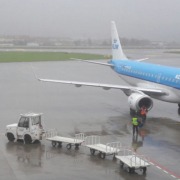
It is worth highlighting that, for the first time, tarmac delays of more than 30 minutes are regulated: air conditioning, toilets and, if it does not prolong the wait, free drinking water. After two hours, the aircraft must proceed to a disembarkation point, except for reasons of safety, immigration, air traffic control or security.
– Extraordinary circumstances: Extraordinary circumstances are defined for the first time as events that are not inherent in the normal activity of the airline and that are beyond its effective control, two cumulative requirements (we recommend reading our previous article, Regulation (EC) No. 261/2004 and the concept of “extraordinary circumstances” in air transport. In addition, the airline must explain to the passenger which circumstance on the list it is invoking or, if it does not appear on the list, which event it is and why it qualifies (a list that will be reviewed every five years).
An annex contains a non-exhaustive list of cases of great practical interest, such as strikes by the airline’s own staff. These only count as an extraordinary circumstance if the airline proves a direct causal link between the incident and the strike, and that it adopted all reasonable measures (which would exclude cases such as strikes announced with sufficient notice or that could have been avoided).
– Information and complaints: Airlines and intermediaries must publish on their website and apps the rights of passengers and the complaints procedure available to them, as well as inform them, before purchase, whether the ticket offered is issued under one or several independent contracts. The burden of proving that they provided this information lies with them.
There will be a complaints mechanism, which may be used for twelve months from the flight (or three months from the compensation claim, if that date is later), with acknowledgement of receipt within seven working days and a reasoned reply within one month (in justified cases, the final reply may take less than two months from receipt).
– Compensation, refunds and vouchers: Compensation amounts remain at 250, 400 or 600 euros depending on the distance of the flight, and the 600-euro band may be reduced by half if arrival occurs no more than four hours after the scheduled time.
Compensation must be claimed within nine months of the actual date of departure. The airline must inform passengers of this right electronically within 96 hours of the end of the journey, acknowledge receipt immediately and, within 30 calendar days, pay or justify its refusal.
The refund becomes automatic within seven calendar days of the passenger choosing it. If the airline does not offer a valid alternative within three hours, the traveller may make their own arrangements. When arranging their own alternative transport, passengers must limit their expenses to those that are necessary, reasonable and appropriate, and they are reimbursed for their expenses up to 400% of the value of the ticket. Vouchers, a common practice until now, will only be accepted with the passenger’s express consent and on a durable medium, with a maximum validity of twelve months (extendable only once), and any unused balance will be refunded automatically.
– General assistance: Assistance to passengers is now defined in more specific terms: drinks every two hours; a meal after three hours and then every five (maximum three per day); access to the internet and two telephone calls; hotel and transfers if an overnight stay is needed, with a limit of three nights when the cause is extraordinary circumstances, except for passengers with special needs. If the airline fails to comply, the passenger may pay for the assistance themselves and claim reimbursement (always within reason), which the airline must pay within 14 calendar days of the request.
Commercial airports must provide free drinking water and charging points on their premises, and those with more than four million passengers a year must have emergency plans for mass cancellations or delays of flights.
Pregnant women, breastfeeding mothers, unaccompanied minors and those requiring medical assistance are added to the passengers with special needs. Their companions will be entitled to a free adjacent seat and boarding priority, with prams carried to the aircraft door. If the airport fails to assist a person with a disability and that person misses the flight, the airline will be liable (and may then seek redress from the airport operator).